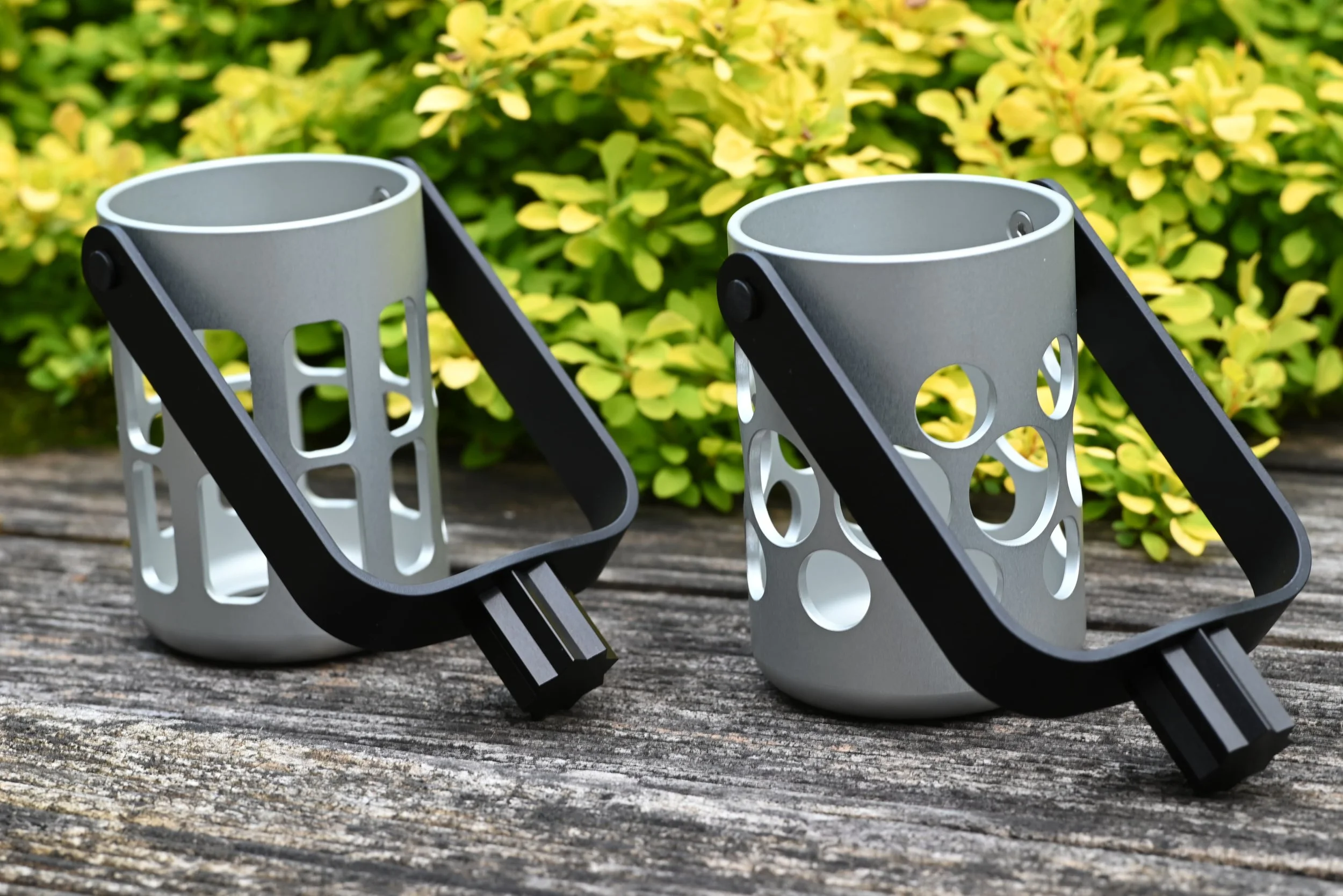
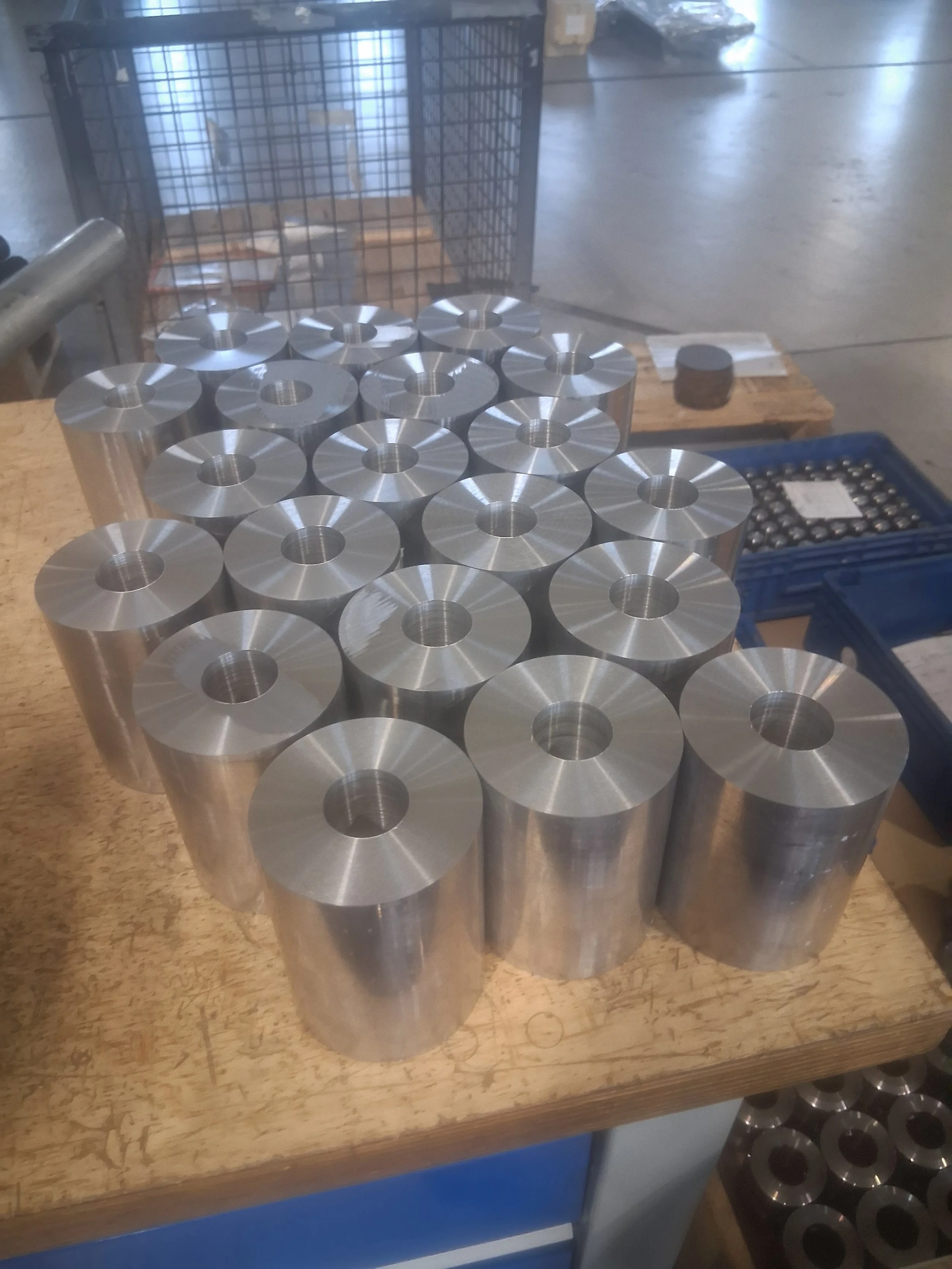
Cupholders start out as a pile of raw stock - 80mm diameter solid aluminium bars for the cups, 3mm thick aluminium plate for the brackets, some Delrin rods and a bunch of hardware for the mounting options.
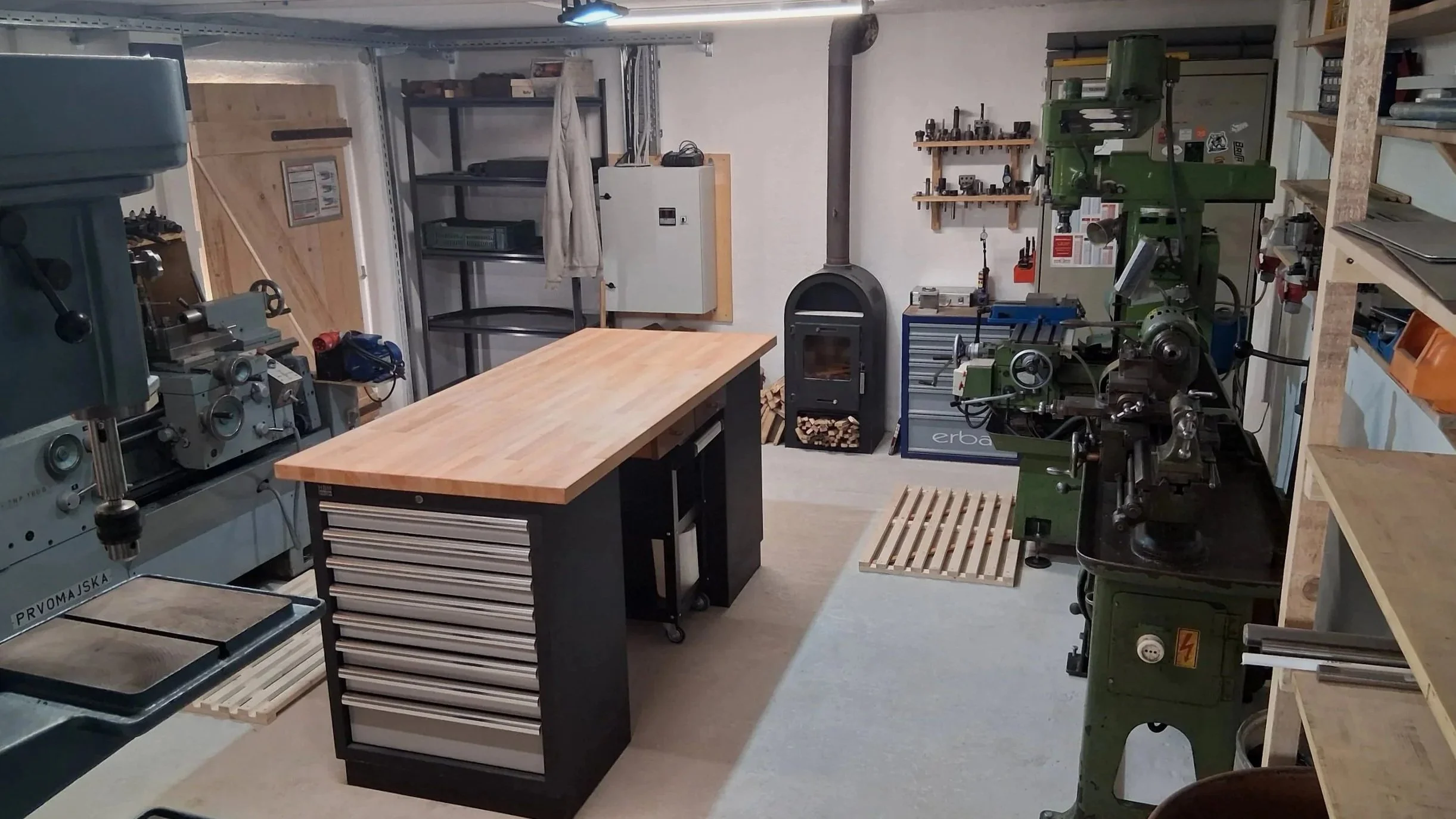
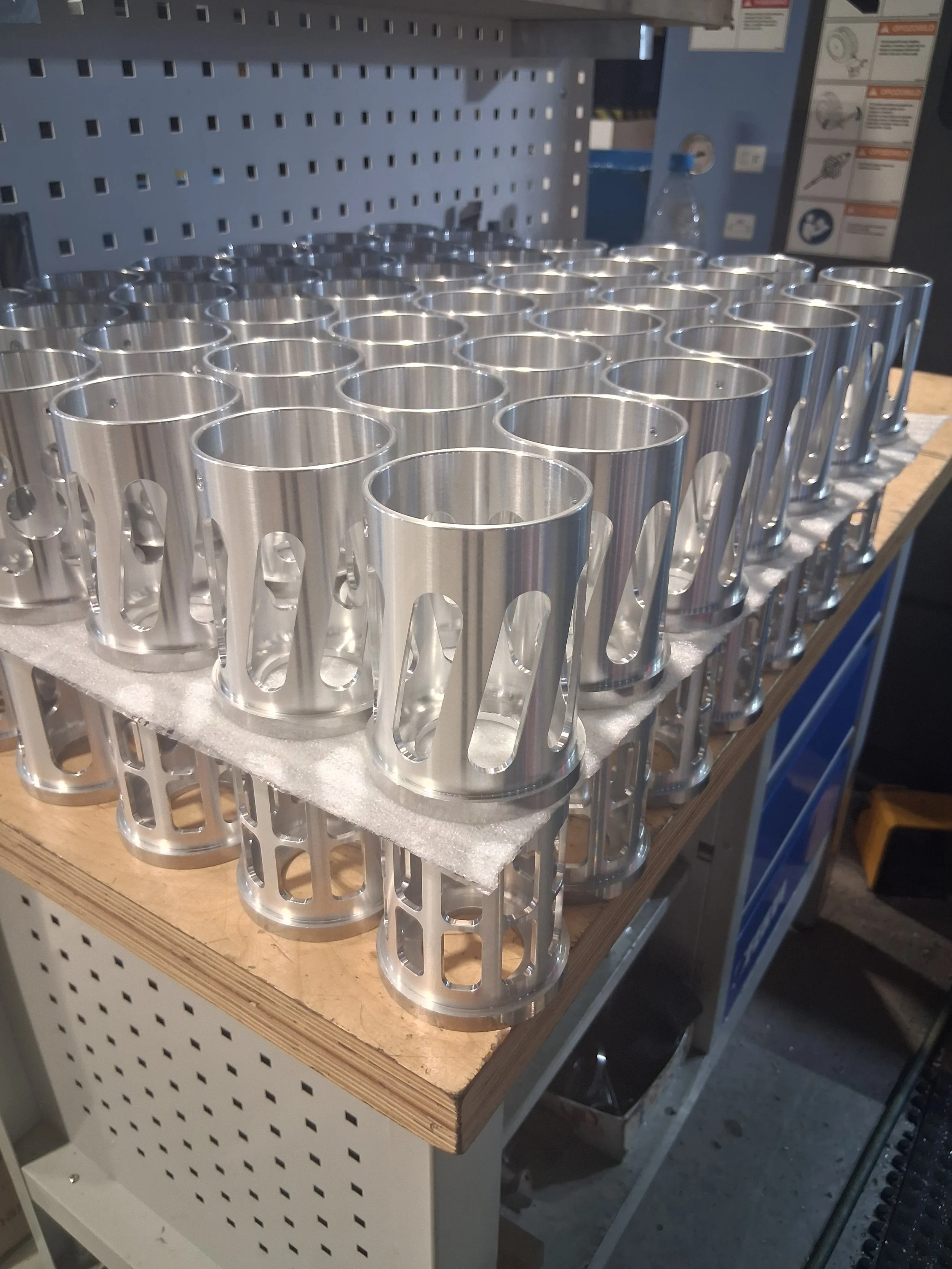
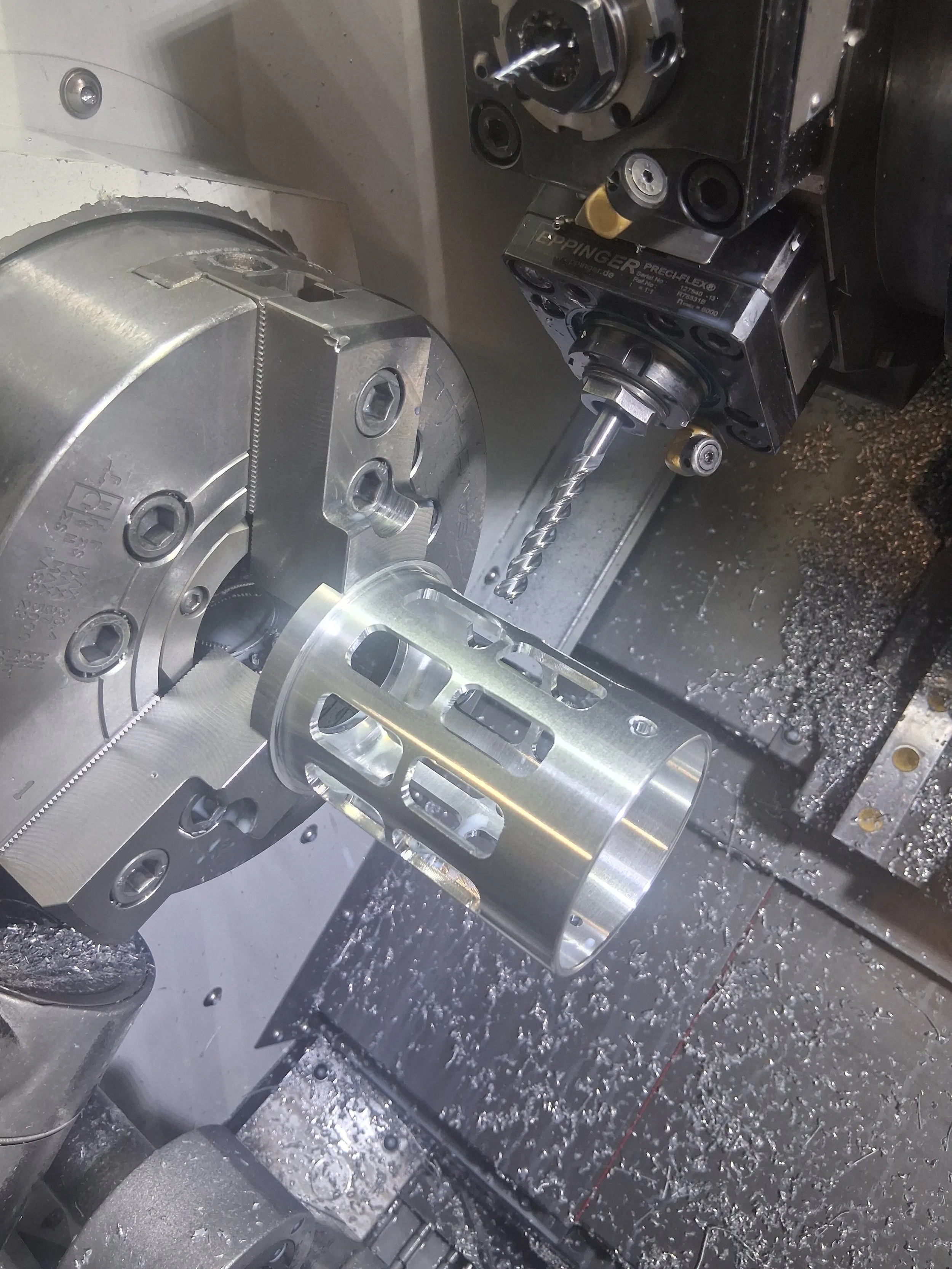
First I start on the aluminium cups - the first step is a trip to the bandsaw to cut 3m bars into manageable chunks for the CNC lathe. These get drilled through, then turned and milled into what is the central part of the product, as well as the most time consuming. Each part is manually deburred, chamfered from the inside and carefully inspected.
Gimballed cupholder build process
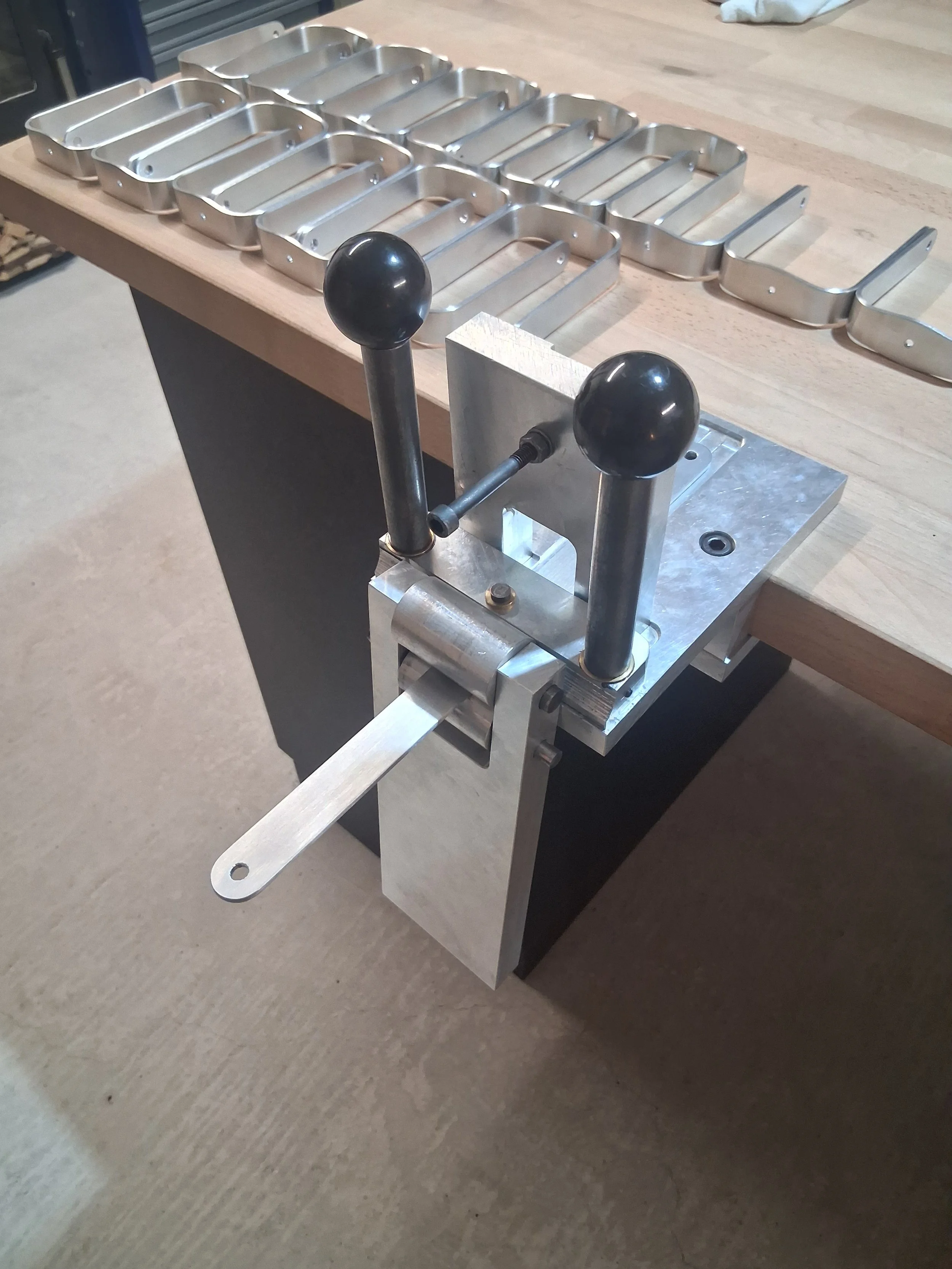
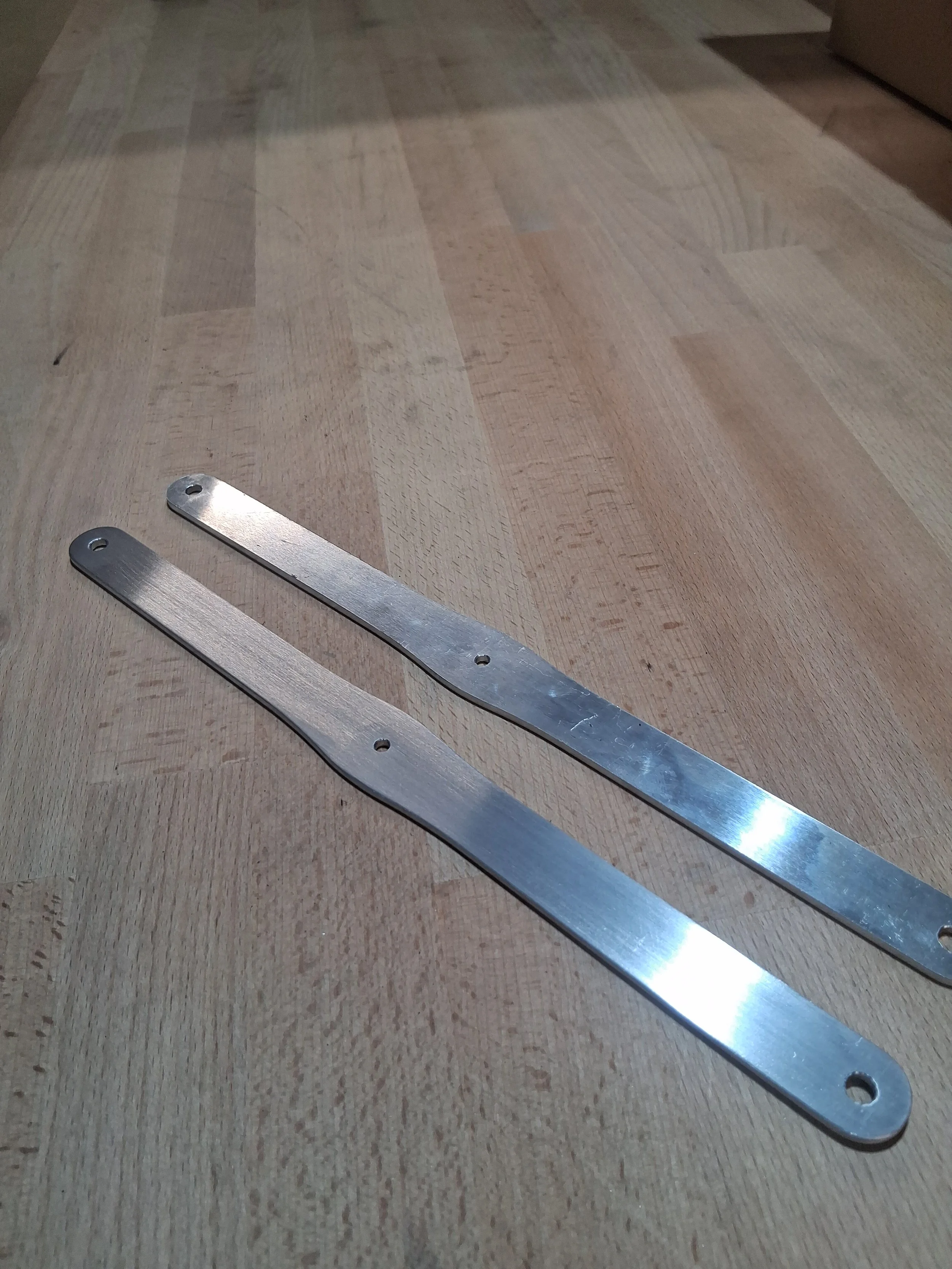
Next up are the tangs - these start as a 2000×1000mm sheet of aluminium. A laser does the cutting, but the parts are rough and have sharp edges, so they are processed on a belt grinder - the faces and edges are polished so they are comfortable to use and pleasing to look at. I manually ream the pivot holes, countersink for the mounting bolt and then start the bending process.
For this I use a custom jig I made for the purpose, it gives very consistent radii, spacing and angles. After bending the tangs are inspected and polished once more, then sent to anodizing along with the cups.
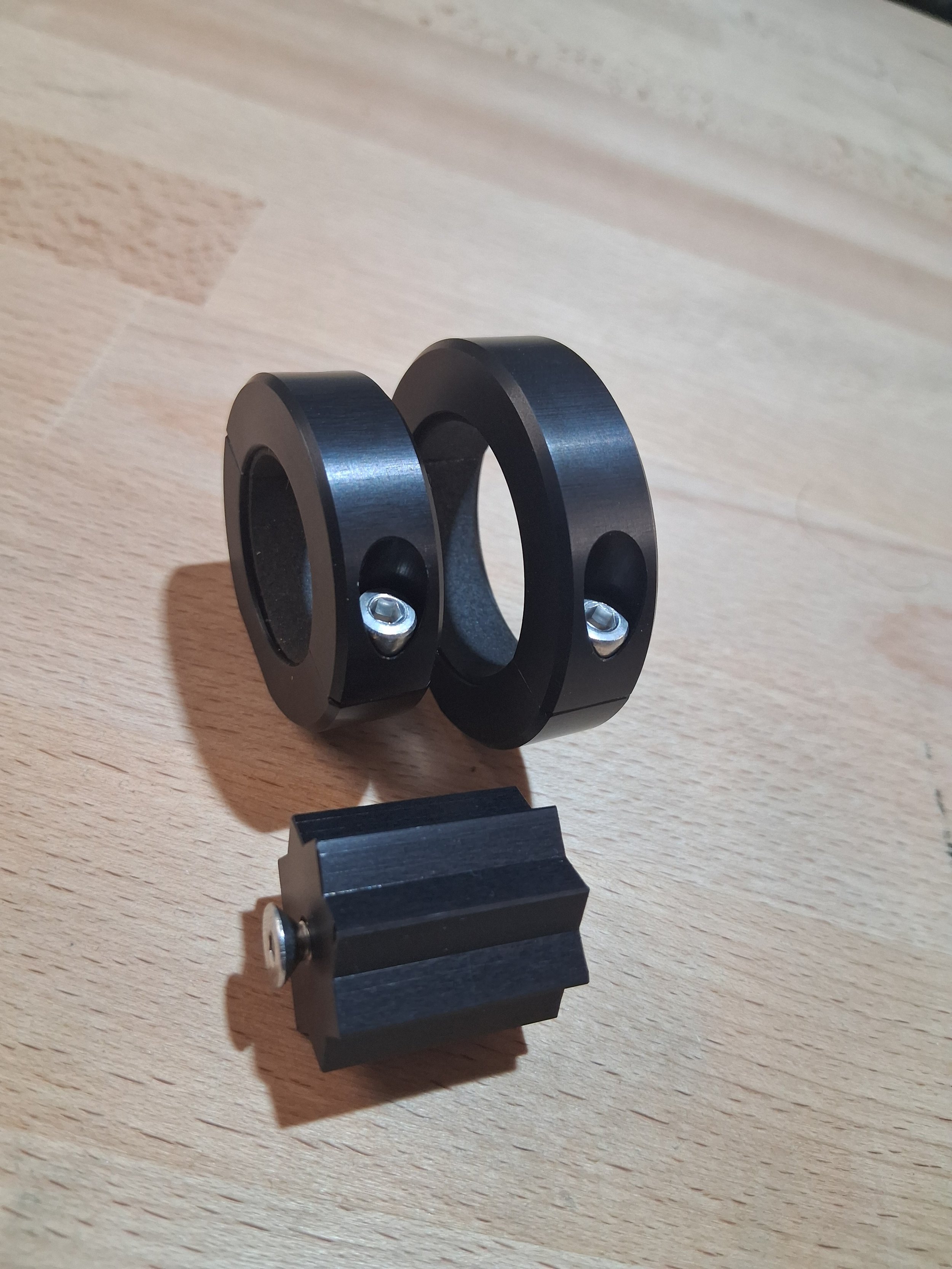
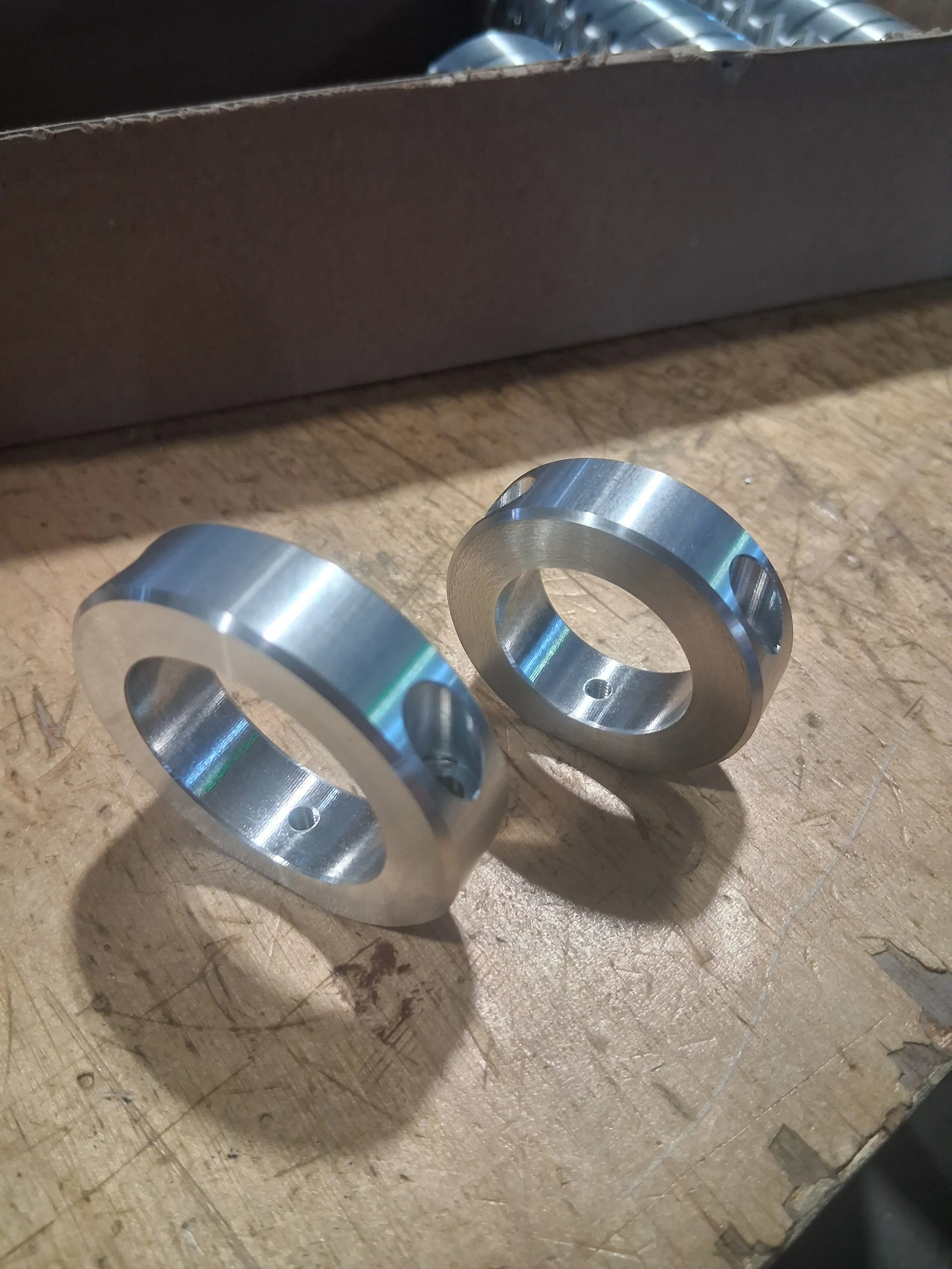
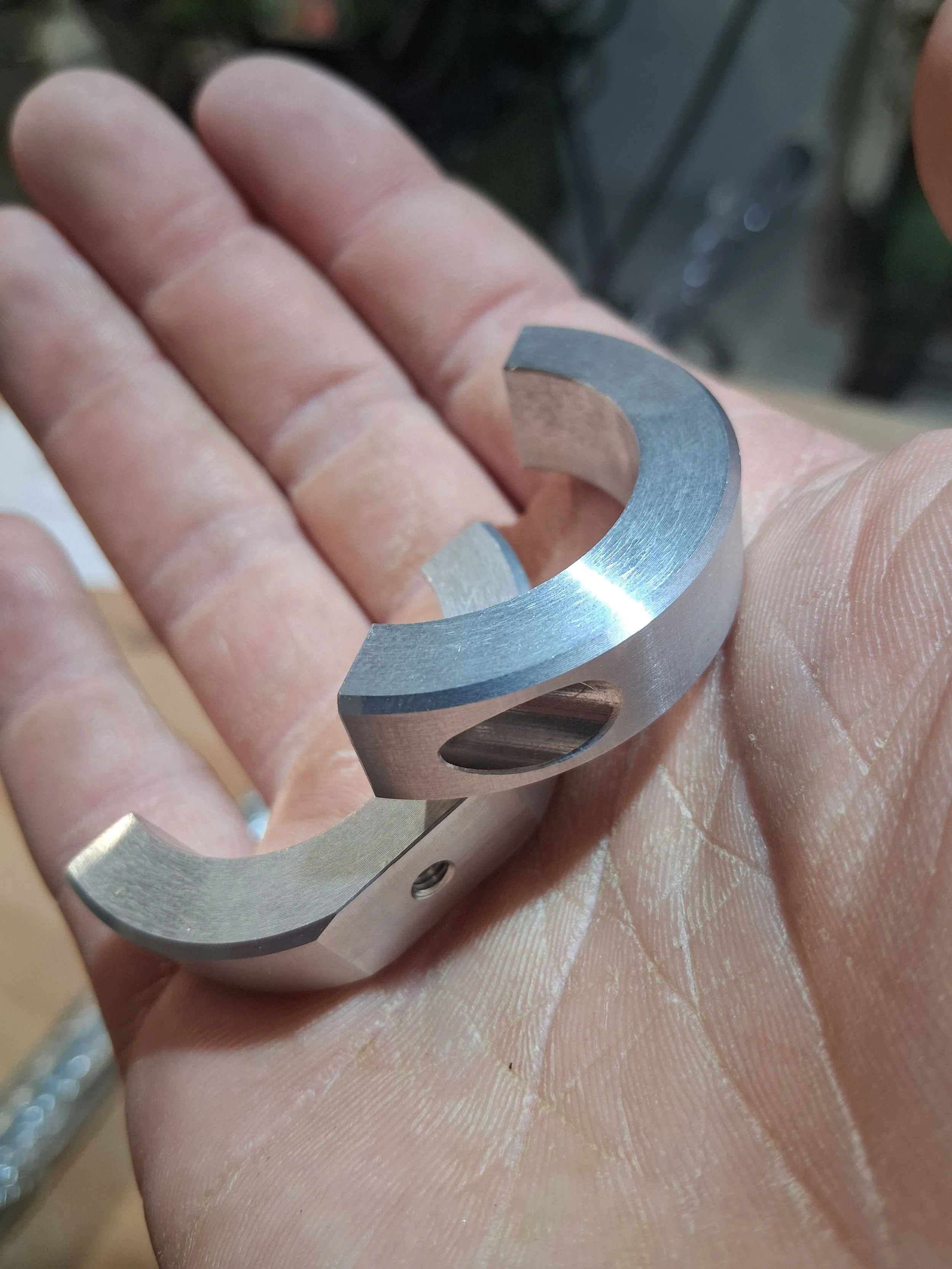
Mounting options are up next. Pipe clamps start out as a 50mm diameter aluminium bar that gets turned, milled, drilled and tapped on a CNC lathe. It is then parted off and goes to the manual mill for cutting - I use a 1.2mm thick saw to give the clamps enough clearance to hold tight, but without an unsightly gap. After anodizing, a strip of EPDM foam is added to protect your boat and to give even better grip on polished tubing.
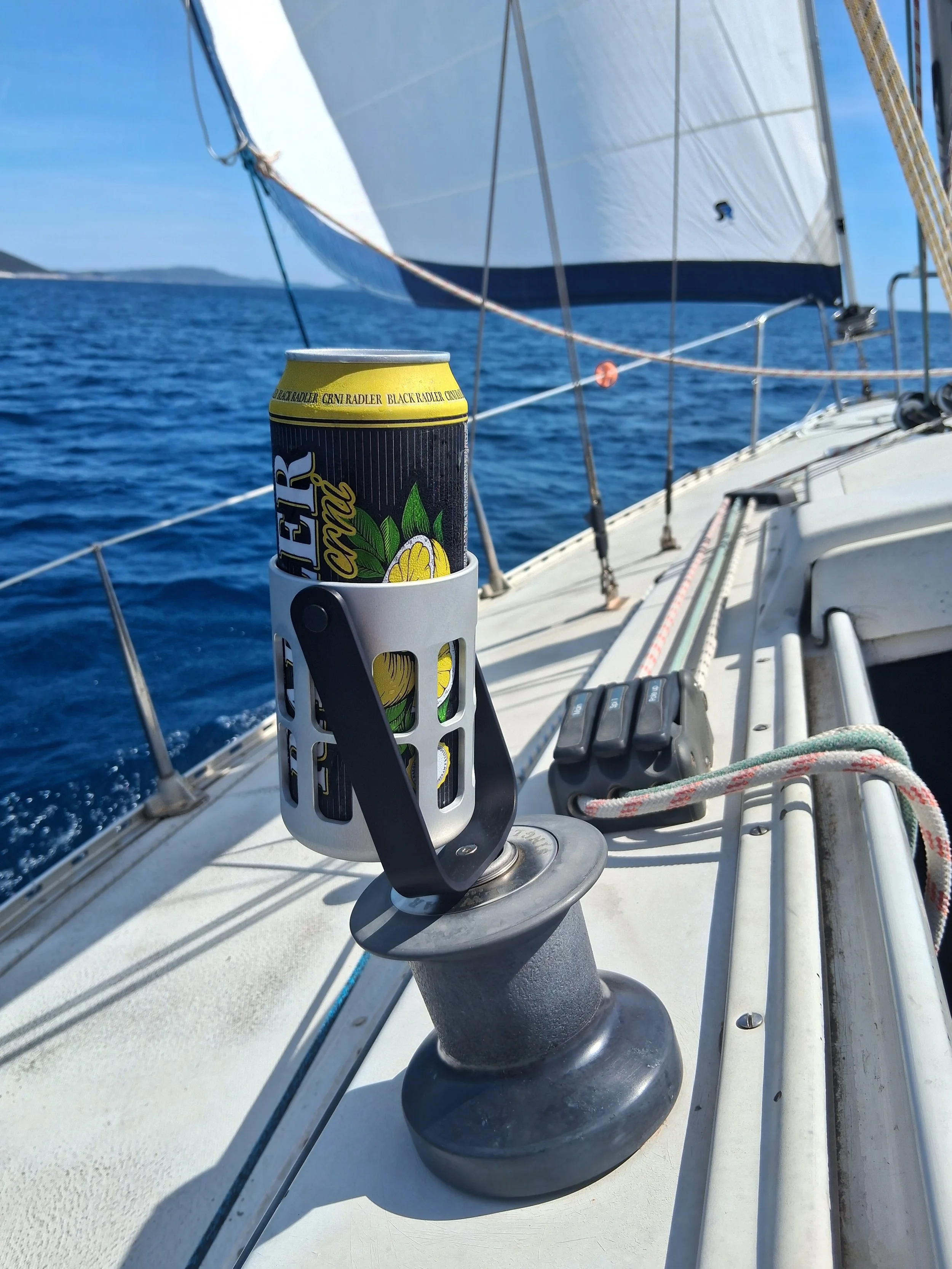
Winch sockets are milled from solid Delrin bars on a Y-axis lathe, then tapped, parted off and manually deburred.
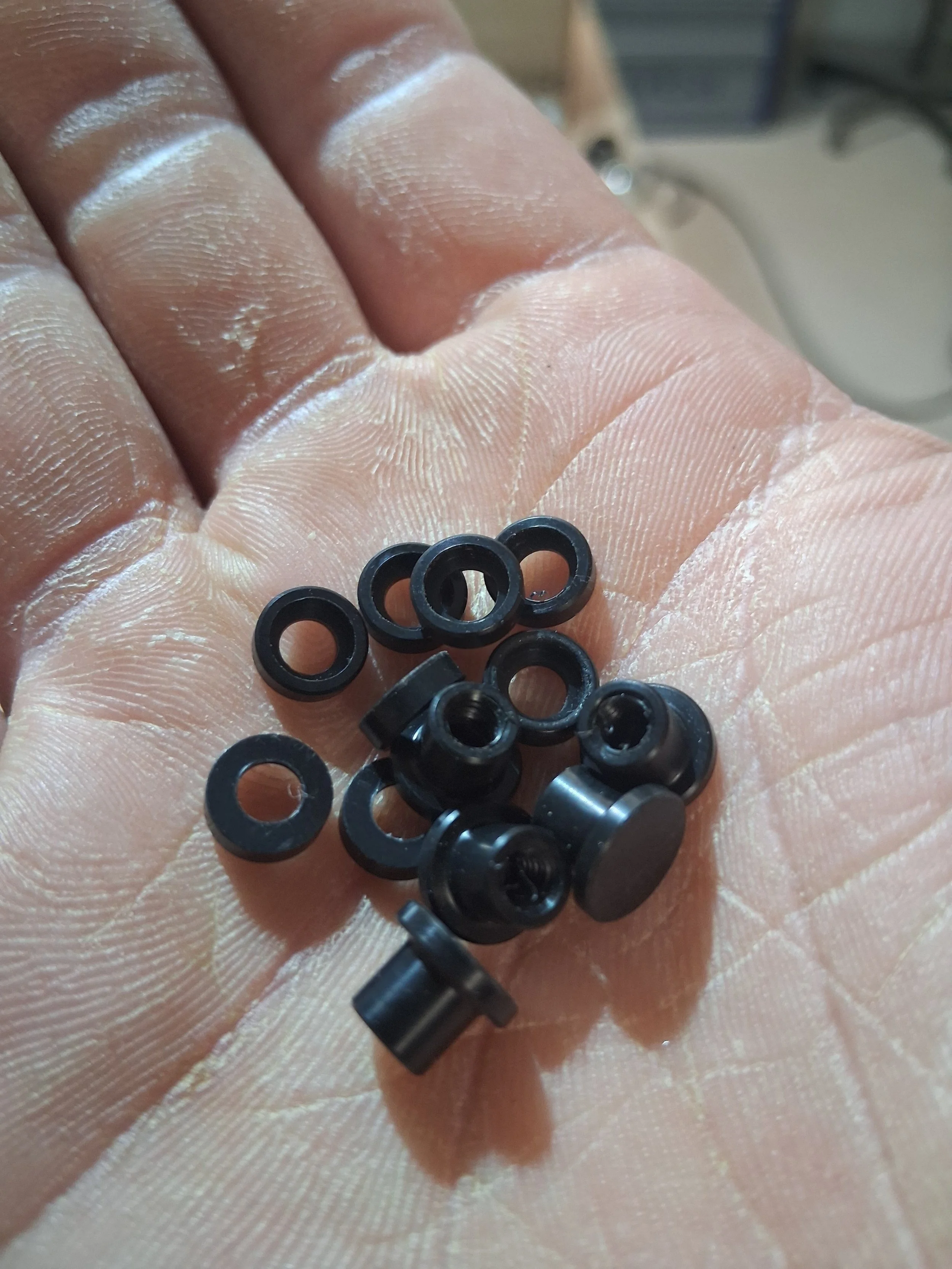
The tang and cup are held together on a 2-piece pivot system that is also made out of Delrin - these are relatively simple parts from a distance, but they require precise tolerances to work correctly, and they are tiny, so dropping one inside the machine means it is as good as gone.